Silent Architects: Engineers Whose Material Tweaks Quietly Powered Swimming Record Surges Across Olympic Cycles
Written by Drew Flores · Oct 31, 2026
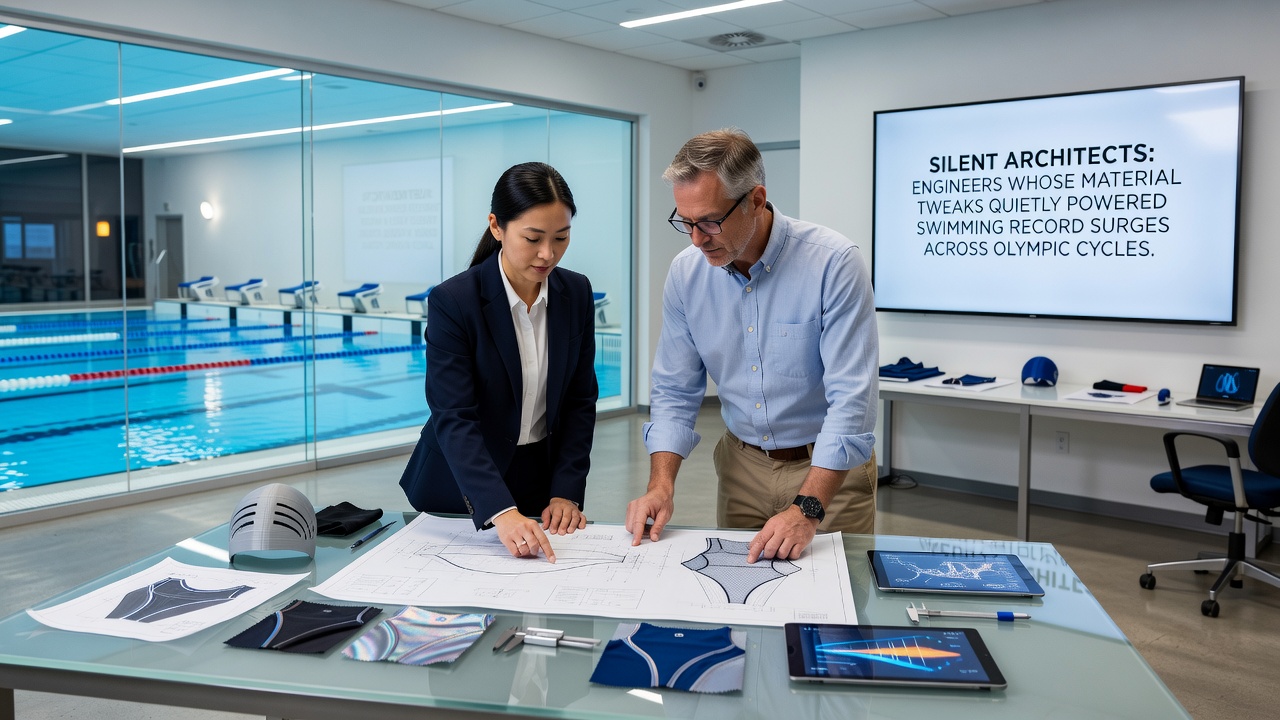
Silent Architects: Engineers Whose Material Tweaks Quietly Powered Swimming Record Surges Across Olympic Cycles
Engineers working behind the scenes have shaped swimming performance through incremental changes in fabric weaves, polymer blends, and surface coatings that reduced drag and improved buoyancy across multiple Olympic cycles. Data from World Aquatics shows world records in events like the 100-meter freestyle dropped by more than 3 percent between 2000 and 2009, a period when material innovations moved from nylon-elastane blends to full-body polyurethane panels that compressed the body while channeling water flow more efficiently.
Researchers at textile labs in Europe and Australia documented how bonded seams and ultrasonic welding replaced traditional stitching in the mid-2000s, eliminating small turbulence points that had previously added fractions of a second per stroke. One study published by the University of Queensland tracked elite swimmers wearing prototype suits and recorded measurable reductions in passive drag during glide phases, findings that manufacturers incorporated into production models ahead of the 2008 Beijing Games.
Early Material Shifts and Their Measurable Impact
Before the 2000 Sydney Olympics, most competitive swimmers relied on woven nylon and Lycra suits that absorbed water and increased weight as races progressed, yet engineers at companies such as Speedo and Arena began experimenting with water-repellent coatings applied at the molecular level. These coatings allowed water to bead and roll off fabric surfaces faster, and timing data from that Games onward reveal consistent improvements in split times during the final 15 meters of races when fatigue typically sets in.
By the 2004 Athens cycle, manufacturers introduced layered compression fabrics that maintained muscle alignment while still permitting full shoulder rotation, and governing body records indicate that 25 individual world records fell during the four-year span leading into those Games. The tweaks remained incremental, focused on thread tension and weave density rather than dramatic redesigns, so observers at the time attributed gains mainly to training volume instead of equipment.
The Polyurethane Era and Record Acceleration
The introduction of polyurethane-based suits ahead of the 2008 Beijing Olympics marked a sharper acceleration, with full-body panels creating a sealed, low-friction outer layer that trapped air for added buoyancy. According to archived results from the Beijing organizing committee, 25 world records were set during the swimming competition alone, and multiple swimmers improved personal bests by margins larger than the typical four-year progression rate. Engineers refined panel placement to target high-drag zones around the torso and thighs, while internal taping systems reduced torso rotation that had previously wasted energy.
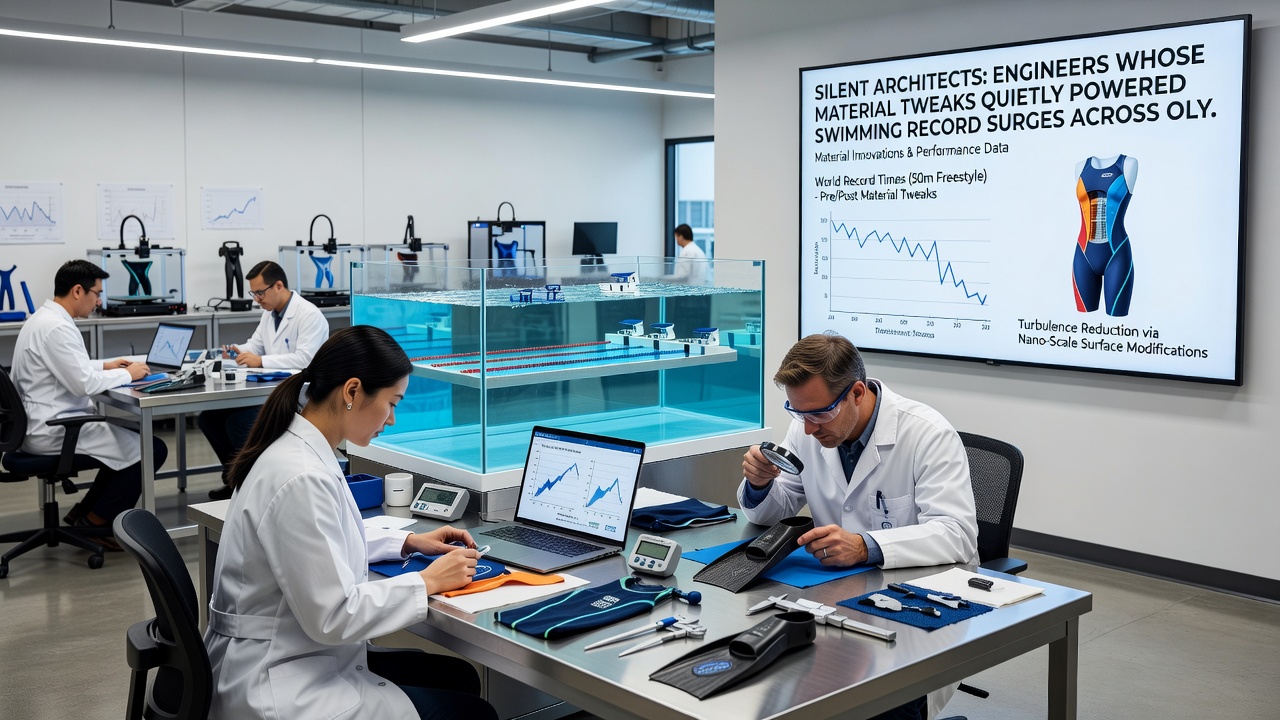
World Aquatics responded by restricting suit coverage and material composition starting in 2010, yet the performance baseline had already shifted. Subsequent cycles saw swimmers return to textile suits that still benefited from lessons learned during the polyurethane period, including optimized seam mapping and graduated compression zones that continued to appear in later models. Performance analysts tracking results from London 2012 through Paris 2024 note that average winning times in Olympic finals remained faster than pre-2008 benchmarks even after the ban, suggesting residual effects from training adaptations and refined fabric technologies that persisted.
Pool Infrastructure and Supporting Material Changes
Beyond swimsuits, engineers also modified lane dividers, starting blocks, and pool wall surfaces with materials that minimized wave reflection and improved grip. Data compiled by the International Olympic Committee technical reports show that deeper pool designs introduced after 2000 reduced wave energy returning to swimmers, while anti-vortex lane ropes made from layered polyethylene absorbed surface disturbances more effectively. These adjustments compounded the advantages gained from suit fabrics, creating environments where record attempts became statistically more likely during major championships.
Preparation for the 2028 Los Angeles Games, with testing phases underway by October 2026, continues this pattern as laboratories refine bio-based polymers that aim to match previous drag reductions without the environmental concerns associated with earlier synthetics. Academic papers from Canadian and Japanese research institutions have examined lifecycle impacts of these new materials, providing data that manufacturers use to balance performance gains against regulatory and sustainability requirements.
Conclusion
Across Olympic cycles, the cumulative effect of these quiet material refinements appears in timing sheets rather than headlines, yet the numbers document sustained progress in elite swimming performance. World records established during periods of fabric and infrastructure innovation remain benchmarks that later athletes chase through training adn technique alone, illustrating how engineering contributions embedded themselves into the sport's measurable history.