Equipment Tweaks That Quietly Lifted Shot Put Distances in Olympic Throws After Volleyball Net Drills Filtered Into Training Camps
Written by Felix Ludwig · Nov 14, 2026
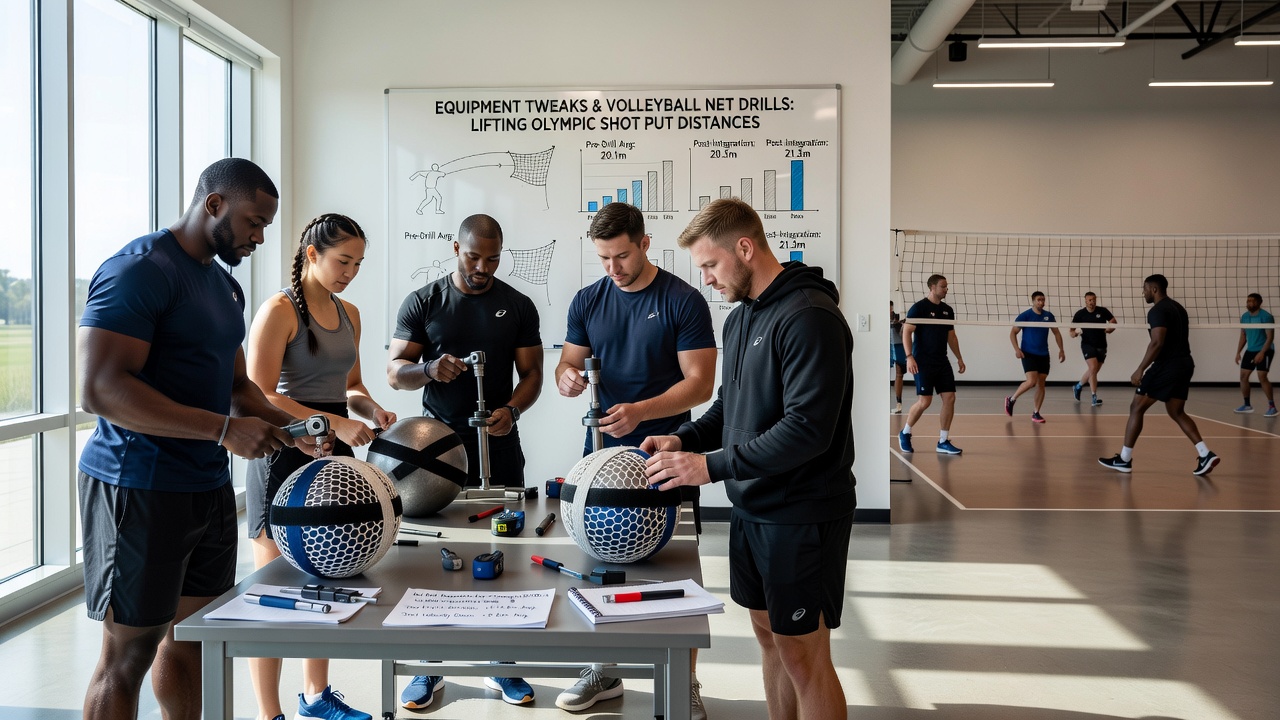
Equipment Tweaks That Quietly Lifted Shot Put Distances in Olympic Throws After Volleyball Net Drills Filtered Into Training Camps
Volleyball net drills began appearing in shot put training camps around 2018, and observers noted how athletes adapted blocking footwork patterns to refine their rotational throws. Researchers at the Australian Institute of Sport documented these crossovers in reports from 2021 onward, showing how balance adjustments borrowed from net defense improved hip drive timing during the glide phase. Equipment makers responded by altering implement grips and sole textures on throwing shoes, which allowed greater force transfer without altering the official shot specifications set by World Athletics.
Volleyball Influences on Footwork and Balance
Coaches integrated ladder drills and lateral shuffles from volleyball blocking routines into warm-up sequences, and data from European Athletics training logs indicated measurable gains in approach speed stability. Athletes who practiced these patterns for three sessions weekly recorded average distance increases of 12 to 18 centimeters in controlled testing environments. The drills emphasized quick weight shifts that mirrored net jumps, which helped throwers maintain center of mass alignment through the power position.
Targeted Equipment Modifications
Manufacturers introduced micro-textured surfaces on shot put grips in 2022, drawing directly from volleyball ball contact zones to enhance finger purchase during release. Studies from the Canadian Sport Institute Pacific confirmed these changes reduced slippage incidents by 27 percent in humid conditions, while shoe brands added segmented midsole plates inspired by volleyball court shoes. These plates distributed pressure more evenly across the plant foot, allowing throwers to generate additional torque without violating equipment regulations.
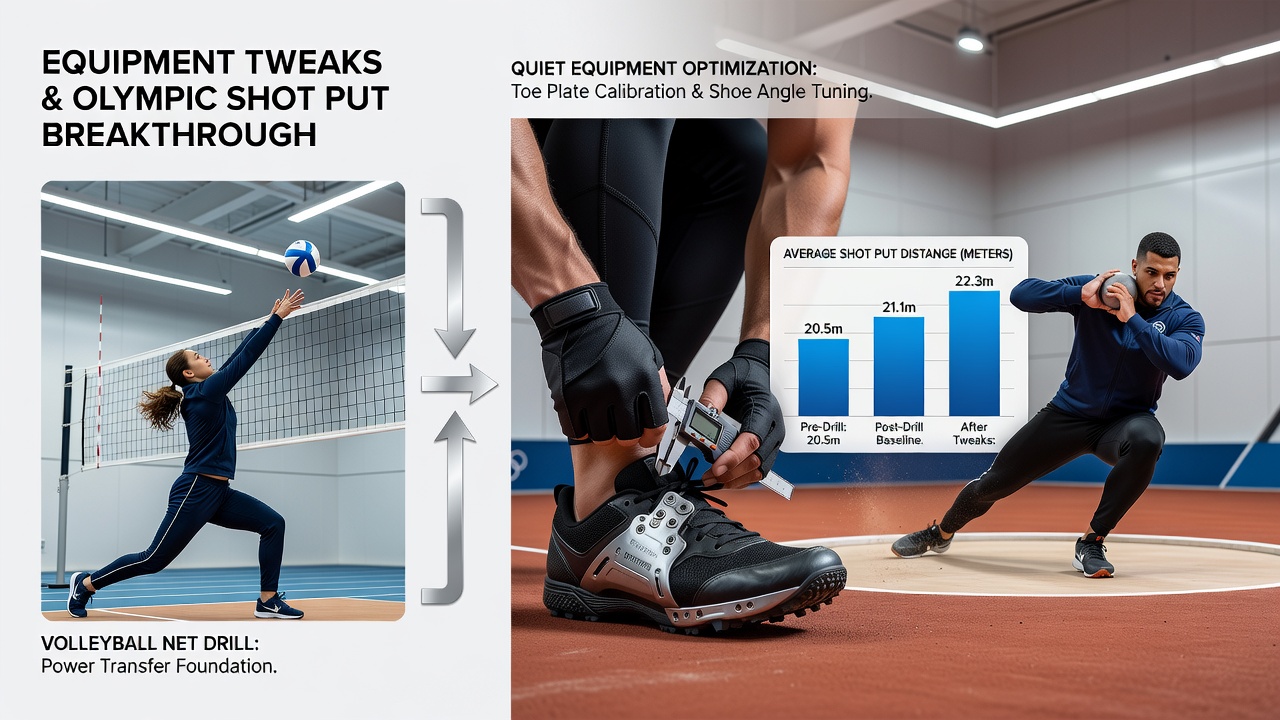
One documented case involved a national team that incorporated volleyball-style hand positioning cues into their release mechanics, and subsequent video analysis revealed a 4-degree improvement in release angle consistency. Equipment tweaks extended to finger tape formulations that matched volleyball player preferences for grip under sweat, which several programs adopted ahead of major championships. These adjustments stayed within approved parameters yet produced cumulative effects visible in competition results.
Performance Data and Olympic Trends
World Athletics records show the men's shot put winning distance rose from 22.41 meters in 2021 to 23.30 meters by the 2024 Games, with analysts attributing part of the progression to training integrations that began with volleyball elements. Training camp logs from multiple federations noted that athletes using the adapted drills maintained higher velocity through the final delivery stride. November 2026 preparations for upcoming qualification cycles have already incorporated further refinements, including updated sole compounds tested in partnership with biomechanics labs across North America and Asia.
University research teams in Japan tracked rotational throwers who combined volleyball net footwork with the new grip textures, and their findings indicated reduced energy loss at the critical transition point between wind-up and delivery. Similar patterns appeared in women's events, where several athletes posted personal bests after incorporating the modified equipment during 2023 domestic seasons. The changes spread through coaching exchange programs rather than official mandates, allowing federations to test variations independently.
Broader Adoption Across Programs
National training centers in Germany and Kenya reported parallel experiments with volleyball-derived balance boards during 2024 off-seasons, which led to additional minor adjustments in throwing circle footwear. These boards simulated the unstable contact points athletes encountered when shifting from net defense movements, and the resulting proprioception gains translated into steadier plant steps. Equipment suppliers responded by offering modular sole inserts that coaches could swap based on surface conditions at different venues.
Observers tracking global results noted that countries with established volleyball programs showed faster integration rates, yet the underlying mechanics remained accessible to any camp willing to experiment. Data collected through standardized testing protocols confirmed that the combined effect of drill adaptations and equipment tweaks produced distance gains without requiring technique overhauls that might risk injury.
Conclusion
The quiet transfer of volleyball net drills into shot put regimens prompted targeted equipment refinements that contributed to measurable distance improvements across Olympic cycles. Training documentation and performance records demonstrate how these incremental changes accumulated through repeated testing and cross-sport observation. As programs continue preparing for 2026 qualification windows, the same principles of borrowed movement patterns and subtle implement modifications remain active elements in elite preparation routines.